

The Art of Infusion: Why Your Flavored Tea Will Never Taste the Same Again
In a world saturated with standardized artificial flavors, drinking a truly fragrant tea made with fresh flowers is nothing short of a miracle. It's a rare, precise, and slow craft… and that's precisely what makes Spiritus Mundi teas irresistible.
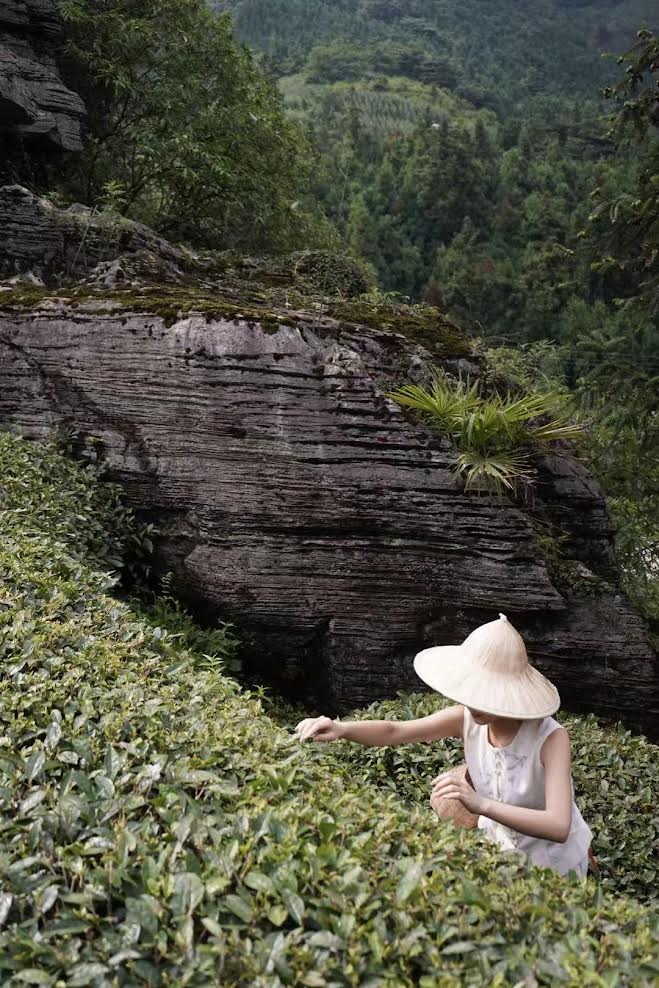
Forget factory-sprayed essential oils. This is how an authentic and vibrant fragrance is born in the mountains of Sichuan, without a single drop of added aroma.
1. It all begins at dawn: The quest for the living flower
The process does not tolerate mediocrity. The flowers—gardenia, michelia, osmanthus, rose, pomelo—must be picked at sunrise. It is at this precise moment, still glistening with dew, that their aromatic intensity is at its peak.
It's not just a flower, it's the beating heart of our creations, just like our Green Gardenia Garden where the freshness of the morning is found directly in your cup.
2. Natural infusion: When the flower "breathes" in the tea
This is where the magic happens. The Sichuan tea leaves, sometimes still warm from roasting, receive the fresh flowers. They are not mixed; they are layered.
As the flowers open naturally, they release their fragrance, which penetrates the pores of the tea leaf.
-
No chemical flavorings.
-
No sprays.
-
Simply the essence of the plant.
It is this floral respiration that gives our Michelia Mist , a green tea of absolute delicacy.

3. The alchemy of the night: Patience as the only ingredient
For several hours, often all night, the tea and flowers rest together. Nothing is rushed. If the process is accelerated, the fragrance becomes overpowering.
This extended time, this silence, allows the aromas to settle gently and lastingly. This is the secret to the natural elegance of our black tea. Queen of Roses , far from the candy-like rose teas you may be familiar with.
4. The forgotten step: Manual removal
Once the fragrance has been absorbed, the flowers have given their all. They must be removed. This monumental task is done by hand, leaf by leaf, flower by flower.
This is a step the industry has abandoned for the sake of profitability. For us, it's a mark of respect. Our tea masters perform this meticulous sorting to guarantee the purity of teas like the Osmanthus Melody .
5. Intensity through repetition
A single cycle is not always enough. To obtain a deep fragrance that lasts over several infusions, artisans repeat the operation: Fresh flowers → Impregnation → Manual removal → New flowers.
Each cycle enriches the leaf, layer after layer. It is this complexity that gives it its explosive character. Pomelo Lightning .
Conclusion: The taste for truth
A tea flavored by natural infusion is not a scent frozen in a laboratory. It evolves in your cup. It gains in roundness, in maturity, it is alive .
It is this ancestral know-how, that of the producers who are friends of my family in Sichuan, that I want to introduce to you.
Don't just drink tea, taste the soul of the mountains.

.svg)


Leave a comment
This site is protected by hCaptcha and the hCaptcha Privacy Policy and Terms of Service apply.